
The IDBI Bank stake sale could generate over Rs 26,500 crore, helping the government surpass its annual divestment target, notes A K Bhattacharya.

India's drug price regulator, the National Pharmaceutical Pricing Authority (NPPA), has significantly reduced the maximum retail prices (MRPs) of 543 cancer drug brands and pack sizes, with some reductions reaching up to 93 per cent. However, expensive innovator drugs from multinational corporations, including high-selling Bevacizumab and immunotherapy Keytruda, remain unaffected, highlighting limitations in the price control intervention.

Divestment commission for sale of 4 PSUs

Beijing clearly intends to extend the China-Myanmar Economic Corridor to Bangladesh as part of its larger Maritime Belt and Road Initiative to boost its Indian Ocean presence.
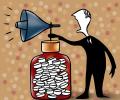
For decades, multinational pharmaceutical companies and Indian drugmakers worked in ways that supported each other: MNCs brought innovation and brands, while Indian companies built scale through generics and cost efficiency. There was an important overlap - generic drugs - but this is shrinking fast. And the consequences are reshaping India's gigantic pharmaceutical market.
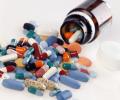
Finance Minister Nirmala Sitharaman on Sunday proposed Rs 10,000 crore investment in the biopharma sector over the next five years, a move which would give a boost to the country's pharmaceuticals industry.

'Any promotional activity carried out under the pretext of disease awareness, influencer engagement, corporate campaigns, or similar activities that create brand recall/product visibility of the prescription shall also be treated as violations.'

Indian Pharmaceutical Alliance (IPA) on Friday said US President Donald Trump's move to impose 100 per cent import tariffs on pharmaceutical drugs from October 1 will impact only patented and branded products, not generic medicines.

Which were India's first companies that still exist today? Many trace their origins to over a century back. These venerable organisations are business entities. But they chronicle the beginnings of Corporate India.
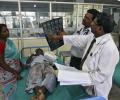
The rationalisation of goods and services tax (GST), announced on Wednesday, directly lowers the cost of everyday medical consumables, and also high-end therapies in oncology and rare diseases, helping reduce out-of-pocket patient expenditure and better adherence to medication.

A fresh US executive order (EO) which seeks to bring down prices of prescription drugs in the country by up to 90 per cent -- on par with other developed nations -- will affect innovator companies, while sparing the Indian generic drug makers in the short term. US President Donald Trump signed the EO on Monday, directing the US Trade Representative and the Secretary of Commerce to act against foreign countries that "purposefully and unfairly undercut market prices", driving price hikes in the US.

As many as 20 central public sector enterprises and their units are at various stages of strategic disinvestment, while six are being considered for closure or are under litigation, Minister of State for Finance Anurag Singh Thakur said on Monday.

If India caves in to US pressure as Trump hopes it will, he will further try to blackmail it into submission, points out Ramesh Menon.
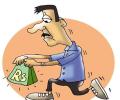
Pawan Hans, Dredging Corp on list to meet target of Rs 800 bn for 2018-19

'Growth for some companies has been hard to come by and this is a smart way to get there.'
The realisation has struck people that multinationals have been doing all those things that Indian businessmen have long been accused of doing.

For the consumer, there would be practically no impact on prices of essential medicines this year.
In recent months, several pharma multinational corporations (MNCs) are increasingly turning to Indian companies to expand market reach in the country's pharmaceuticals sector. Sanofi's partnerships with Dr Reddy's, Cipla, and Emcure, AstraZeneca and Mankind Pharma - teaming up for asthma medication distribution - are a few instances of this trend. This strategy allows MNCs to leverage established Indian networks and reach a wider audience. Indian companies also benefit from global brands and expertise, say analysts.
Indian drug firms get a shot in the arm in the $12 bn Australian drug market as the Therapeutic Goods Administration (TGA), Australia agrees to accelerate the drug approval process in that country for Indian players who already have an approved plant and product from one of the stringent regulatory authorities like US, EU or Canada. From current sales of $340 mn, the Indian firms can see a significant upside in sales; felt Dinesh Dua, former chairman of the Pharmaceutical Exports Promotion Council of India (Pharmexcil), and the MD of Nectar Lifesciences. He highlighted that only 12 percent of the Australian drug market is generic, as against 80-90 per cent in the US or EU. Of this $1.5 bn generic drug market in India, Indian companies have a small share.
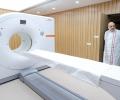
Do we have enough trained oncologists and medical professionals in India to man these over 4,500 beds in the public sector?

Some investors warned of a coming British or even global recession as sterling collapsed to hit its lowest since 1985.
Members of the IMA and IPA had met Mansukh Mandaviya on Monday and expressed their concerns over the regulations.

One of the subsidiaries of Sun Pharma has executed a settlement agreement with Novartis, stipulating a dismissal of the lawsuits filed in the United States against the company regarding submission of an Abbreviated New Drug Application for a generic version of Gleevec, the Indian drug major said in a statement.
Reinvent and innovate will be the key mantra for the Indian pharma industry in the New Year as the 'pharmacy of the world' looks to move from volume to value leadership, amid emerging challenges of inflation and pricing pressures in the global markets. While R&D investment, market competitiveness, regulatory scrutiny, and domestic price regulations are expected to shape the growth of generics and injectable products, concerns such as price control and customs duties on medical equipment will continue to bother the healthcare industry in 2023. The industry believes that in view of India's G20 Presidency, digital health innovation, achieving universal health coverage, improving healthcare infrastructure and delivery will continue to be the key driving factors in 2023.

Out of nearly 30 public sector undertakings and assets under 'strategic sale' plan, only the ONGC-HPCL plan has been completed

Stocks of Indian companies with exposure to Europe fell on Tuesday amid concerns about the impact on their sales in case the Russia-Ukraine crisis worsens and the US and its allies impose economic sanctions on Russia. While top conglomerates, including Reliance Industries, the Tata group, and Aditya Birla Group, said they did not have any significant exposure to Russia, executives of some of the oil and gas, pharmaceutical, and tea companies said they were monitoring the situation closely as they earned substantial income from the region. Russian President Vladimir Putin on Monday ordered troops into two breakaway regions of eastern Ukraine after announcing that Russia would recognise their independence.

Amritsar-born entrepreneur John Nath Kapoor was arrested by the FBI for bribing doctors to over-prescribe a powerful opioid to patients.
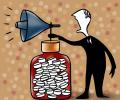
India lost its competitive advantage as China gave fiscal benefits to its local manufacturers. Besides, recent policy flip-flops have, however, dented India's image as the 'pharmacy of the world'.

The Ranbaxy experience has made multinational corporations more cautious about Indian acquisitions in general

In a surprise announcement in April, Sun and Ranbaxy -- at that time owned by Japan's Daiichi -- declared an all-stock deal to create India's largest and world's fifth-largest drugmaker in an over $4 billion deal.
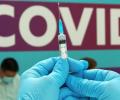
The government may look at areas around Thonnakkal, in Thiruvananthapuram district, for the facility. If successful, this would be one of the few sites of Sputnik V owned by Russian firms outside that country. Shine Jacob and Sohini Das report.

'The target for next year is unlikely to be more than that of this year. The more you divest in any cycle, the less your potential pipeline for the next,' said an official. 'The first two issues we want to tackle and complete in FY20 are Air India and Hotel Ashok.'

To ensure equal access to health care, the government must consider it in a holistic manner and improve all parameters.

Top executives of American pharma companies favour "dialogue" with India and "not confrontation" to address their concerns on key issues like the protection of intellectual property (IP) and clinical trials.
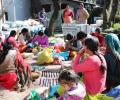
Sanjeev Nayar offers some ideas on how Indians can help in improving the lives of those living in border areas and in the process help the Indian Army.

Increased price control over branded generic medicines has affected its profitability
The Supreme Court had rejected the company's plea for a patent on cancer drug Glivec in April.

A new logo, colour and tagline were unveiled last month.

There is no one way to describe the 12 months that have gone by since India reported its first Covid-positive case on January 30, 2020.

It hopes to turn around Ranbaxy within four years of closing the deal by improving efficiency and resolving all regulatory issues
